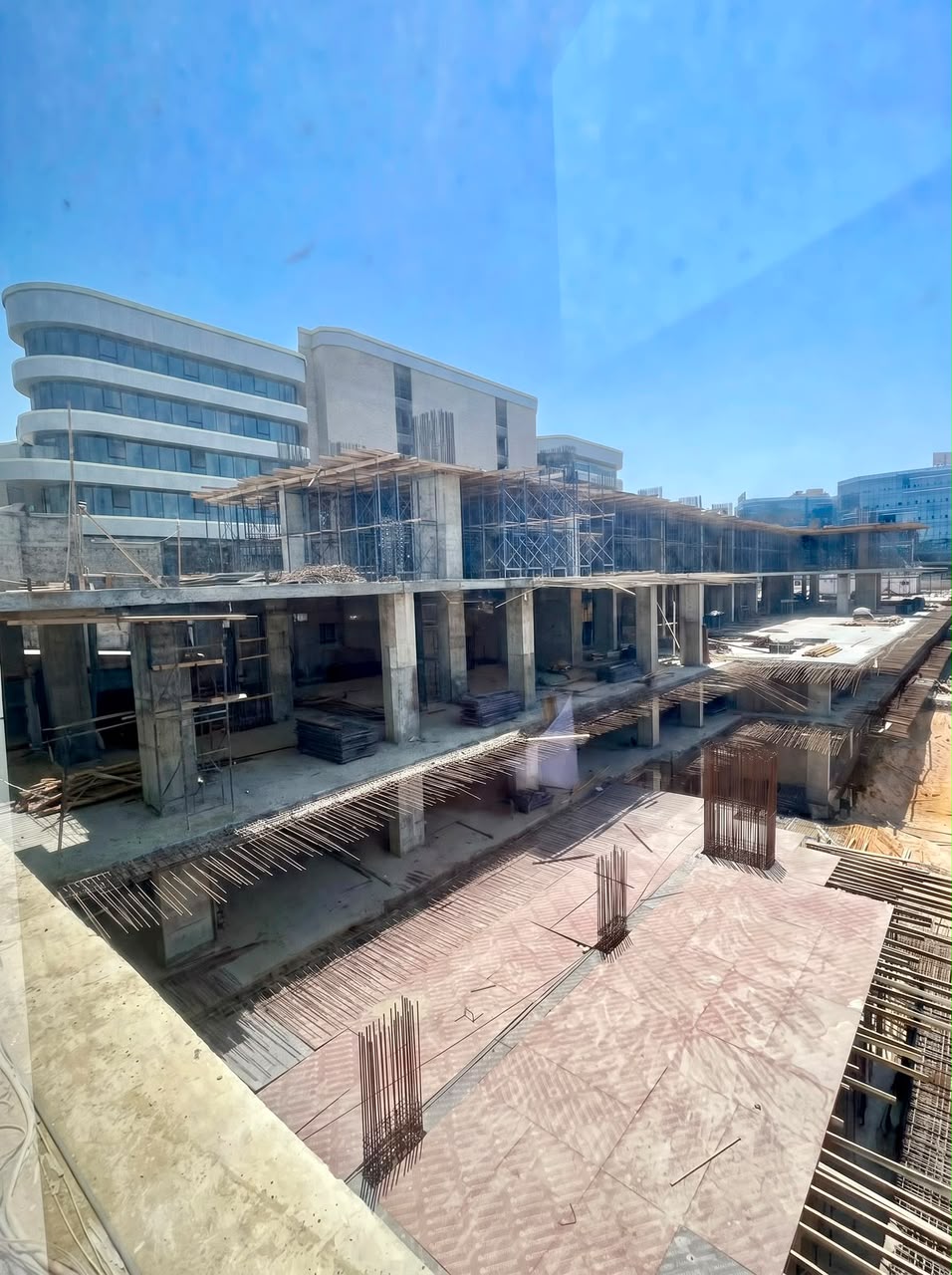

Investing in Commercial Shops in Fifth Settlement offers promising opportunities in New Cairo. Explore prime locations, flexible payment plans, and commercial properties to match your investment goals.
Investing in Commercial Shops in Fifth Settlement A Guide to Choosing the Right Commercial Unit
Buying a commercial shop is no longer simply about owning a property that can be rented out or resold after several years. It has become an investment decision that requires understanding business activities, customer traffic, and the location's ability to generate consistent income. This is why many investors consider investing in commercial shops in Fifth Settlement an attractive opportunity that combines property ownership in a developing urban area with the potential to benefit from demand for different commercial services and activities.
However, having a shop in a prestigious location or a large commercial development does not automatically guarantee a successful investment. Significant differences exist between a unit located on a busy street and another situated along a secondary corridor, or between a shop with a prominent storefront and one that is difficult to notice despite being in the same development.
The available shops for sale in Fifth Settlement range from small units suitable for everyday services to larger spaces designed for retail brands, restaurants, and showrooms. Therefore, making the right choice involves more than considering the price per square meter. It requires identifying the target customers, evaluating the location, and studying expenses and expected returns before purchasing.
Why Is Investing in Commercial Shops in Fifth Settlement Worth Considering?
Fifth Settlement features an urban environment that supports different types of commercial demand. It includes residential neighborhoods, business districts, educational institutions, and administrative complexes, creating diverse needs among residents, employees, and visitors.
This diversity allows investors to select commercial units according to their preferred customer segments. A shop located near an occupied residential neighborhood may benefit from recurring demand for essential services, while units surrounding business districts often depend on employees and activities associated with working hours.
Understanding these differences is essential when evaluating commercial locations within Fifth Settlement. The success of a business depends on how well its services match the surrounding community rather than simply operating in an expensive neighborhood.
The area also offers commercial opportunities within modern developments featuring property management, maintenance services, operational facilities, and parking spaces. These features may improve customer experiences and make units more attractive to tenants, provided that the associated expenses remain reasonable relative to potential rental income.
However, urban growth does not necessarily affect all commercial locations equally. A unit within an established, highly occupied neighborhood may perform differently from another in an area still undergoing development, even when the newer project offers more modern architecture and facilities.
Understanding the Difference Between Commercial and Residential Investment
Residential real estate investment generally focuses on providing suitable living spaces. Tenants usually prioritize privacy, finishing quality, comfort, and proximity to essential services.
Commercial real estate operates differently because its success depends largely on the property's ability to help businesses attract customers and generate sales.
A commercial tenant is not simply searching for an attractive space. The business needs a location capable of supporting operating expenses while creating opportunities for sustainable profitability.
For example, a relatively small shop in an area with established customer demand might appeal more to a particular tenant than a larger property situated far from its target audience. Conversely, some businesses require spacious premises for displays, storage, and equipment, even when pedestrian traffic is relatively limited.
Commercial properties also face different risks. Changes in consumer behavior, rising operating expenses, and the relocation of businesses to alternative commercial destinations can influence occupancy and rental demand.
Therefore, investors should consider whether a commercial unit can accommodate multiple activities rather than relying exclusively on one specialized tenant category.
Although commercial properties may offer attractive rental opportunities, higher rental figures alone do not necessarily make them better investments than residential properties. A realistic assessment must include acquisition costs, vacancy periods, operating expenses, and the time required to secure suitable tenants.
The Importance of Footfall When Choosing a Commercial Shop
Footfall refers to the number of people passing through a particular commercial location during a specific period. It is an important indicator for understanding how much exposure a business might receive.
However, footfall is not simply about counting visitors. The characteristics of those visitors, their reasons for being in the area, and their willingness to make purchases are equally important.
A commercial property overlooking a busy road may experience considerable vehicle traffic without receiving significant pedestrian activity. Meanwhile, another unit located along a convenient walking route may attract more potential customers despite having less overall traffic.
The surrounding businesses also influence footfall quality. Operating next to a popular destination can create opportunities when both businesses serve similar audiences. However, the benefit may be limited when their customer groups have completely different interests.
Customer traffic also changes throughout the day and week. Commercial locations near office buildings may experience their busiest periods during working hours, while restaurants and entertainment destinations often attract more visitors in the evenings and on weekends.
Investors should therefore inspect potential locations at different times, observing visitor numbers, surrounding activities, accessibility, and movement patterns within the development.
These observations provide a more realistic understanding of commercial potential than relying exclusively on promotional claims or projected occupancy figures.
How Does Commercial Frontage Affect Property Value?
Commercial frontage plays a much greater role than improving the external appearance of a shop. It represents the visible space through which a business communicates with customers and presents its products or services.
A prominent storefront can increase brand visibility and encourage potential customers to notice the business while moving through a commercial area.
However, frontage width should always be evaluated alongside the internal layout.
A unit with a wide storefront but limited depth may be unsuitable for businesses requiring considerable storage or preparation areas. Another property with a narrower frontage may provide a more practical internal arrangement.
The importance of frontage also varies depending on the intended business activity.
Fashion retailers, bakeries, and showrooms may benefit significantly from visible display areas. Meanwhile, certain professional services depend more heavily on accessibility, reputation, and scheduled appointments.
Before purchasing, investors should also review any restrictions related to signage, window displays, and external modifications. Some commercial developments maintain strict architectural guidelines that can influence how tenants present their businesses.
Ground Floor or Upper Floors؟ Which Is Better for Commercial Investment?
Ground-floor commercial units typically attract considerable investor interest because they offer convenient access and greater visibility from streets and pedestrian routes.
However, this does not mean that ground-floor properties are automatically the most profitable choice.
These units are generally suitable for businesses that depend on spontaneous visits and quick transactions, including convenience stores, pharmacies, bakeries, and certain food-related services.
Customers can usually enter directly without using stairs or elevators, making the shopping experience more convenient.
Upper-floor units may be appropriate for businesses that customers intentionally visit, such as fitness centers, training facilities, specialized services, and destination restaurants.
Their attractiveness depends on efficient vertical transportation, clear directional signage, and a layout that encourages visitors to explore different levels of the development.
For investors, the most important consideration is whether the additional cost of purchasing a ground-floor unit is justified by its expected rental performance.
A properly positioned upper-floor property may offer a competitive investment return when its purchase price is significantly lower and there is genuine tenant demand for its intended activities.
How to Choose the Right Commercial Activity for Your Unit
One of the most important considerations before purchasing a commercial property is understanding which business activities the unit can realistically accommodate.
Different businesses have different requirements concerning floor area, visibility, utilities, customer access, and operational facilities. Residential neighborhoods with established occupancy may support businesses providing frequently needed goods and services.
Locations surrounding corporate offices may attract restaurants, cafés, and services catering to employees throughout the working day.
Commercial destinations focused on shopping and entertainment may appeal to retail brands, specialty stores, and businesses that benefit from visitors spending extended periods within the development.
Investors should ideally prioritize units capable of accommodating more than one business category. This flexibility may improve future leasing opportunities, particularly if market demand changes or an existing tenant decides not to renew their agreement.
Technical requirements are equally important. Electricity capacity, ventilation, drainage, available utilities, and permission to install specialized equipment can determine whether a unit is suitable for a particular commercial activity.
Investors should also verify that the intended business complies with the property's licenses and the development's operational regulations.
Common Mistakes to Avoid When Buying Commercial Shops
One frequent mistake is selecting a unit based exclusively on the reputation of its development without investigating its precise location within the property.
Even shops within the same commercial complex may experience significant differences in visibility, accessibility, and customer movement.
Another mistake involves overlooking maintenance charges and operational expenses, particularly when these costs are high relative to expected rental income.
Investors may also overestimate potential returns by relying on promotional rental projections rather than examining actual leasing transactions or realistic offers for comparable properties.
Purchasing a commercial unit without verifying its legal status, licensing conditions, and permitted activities can also create complications that affect future leasing opportunities.
Delivery and operational timelines deserve careful consideration as well.
A property purchased within a newly developed commercial project may require additional time before surrounding businesses open, services become operational, and visitor activity reaches a sustainable level.
Is Investing in Commercial Shops in Fifth Settlement Suitable for the Long Term?

The long-term potential of a commercial property depends on the quality of its location, the surrounding demand, and the investor's ability to manage expenses during periods without rental income.
Successful commercial real estate investment is not simply about owning space in a prestigious development. It involves acquiring a property capable of supporting genuine business activity and providing tenants with suitable opportunities to reach their customers.
With numerous shops for sale in Fifth Settlement, carefully assessing location quality, expected returns, operating expenses, and leasing potential is more valuable than making decisions based only on advertised prices or promotional offers.
Ultimately, the best commercial investment is not necessarily the largest or most expensive unit. It is the property that offers a carefully considered balance between acquisition cost, rental demand, operational convenience, and the potential to preserve its value over the long term.
To Know More Details Contact us now through 01094942833 Or whats up